

Vertigo
Internal Medicine • Retired Physician • 
Published on 05/10/2026
 My Rounds
In working up vertigo, use the HINTS exam to help differentiate benign (peripheral) from worrisome (central) causes. If the patient has sustained and prolonged vertigo over hours to days, and/or has spontaneous nystagmus on visual inspection, in the setting of an otherwise normal neurological exam, proceed with the HINTS exam. The HINTS exam utilizes the Head Impulse test (HI), Nystagmus test (NT), and the test of Skew (S). If the head impulse test is positive (with catchup saccade), the patient likely has a benign etiology such as vestibular neuritis, coupled with an otherwise normal neurologic exam. If the head impulse test is normal, a cerebellar stroke or other central etiology such as brain stem cva, vertebrobasilar TIA, MS, etc, is still not ruled out. In testing for nystagmus, If the nystagmus is unidirectional, the vertigo is likely benign. If the vertigo is bidirectional or vertical, the etiology is likely central. If the test of skew is abnormal, it suggests a central etiology of vertigo. If the patient has a negative Head Impulse test, bidirectional or vertical nystagmus, and and/or a positive test of Skew, a stat MRI is indicated. If the patient has vertigo that is not sustained, with no spontaneous nystagmus on visual inspection, and vertigo is related to head movement, especially turning over in bed, proceed with the Dix-Hallpike maneuver to assess for benign paroxysmal positional vertigo(bppv).
Disclaimer: The content presented in grandroundsmd.com is provided for informational and educational purposes only. While efforts are made to ensure accuracy, grandroundsmd.com makes no representations or warranties regarding the completeness, reliability, or accuracy of the information contained in each article. The views and opinions expressed are those of the individual authors and do not necessarily reflect those of grandroundsmd.com. This publication is not intended to substitute for professional medical advice, diagnosis, or treatment. Readers are responsible for how they choose to use this information, and grandroundsmd.com assumes no responsibility or liability for any consequences arising from its application.
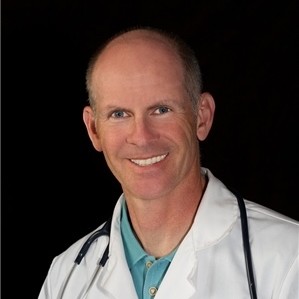
John Joseph Pack MD is a retired internist with a background in journalism. Dr. Pack is former team physician for the Los Angeles Clippers in the NBA and is currently adjoint assistant professor of medicine at the University of Colorado School of Medicine. He completed medical school at UMDNJ-New Jersey Medical School and completed residency in Internal Medicine at The Mount Sinai Hospital in New York City in 1994. Dr. Pack has served as a volunteer physician for the United States Olympic Committee at the San Diego Olympic Training Center in Chula Vista, California and has served as Chief of Staff of the Hospitalist Program at Cedars Sinai-Marina del Rey Hospital. Dr. Pack spent 32 years in solo private practice in Los Angeles, California. He is Editor in Chief of GrandRoundsMD.com

Sign up for our Newsletter!
Receive the latest articles directly in your inbox
Discussion
Comments
0Loading comments…